Australia, Supply Chain

Exporting Mining Equipment to Southeast Asia

Exporting Mining Equipment to Southeast Asia

Southeast Asia offers established markets for Australian mining equipment, technology and services. However, exporting into the region requires a highly strategic approach to international logistics. Cargo must travel from the supplier to a domestic port, cross international waters, clear foreign border controls, and arrive at the site in usable condition. The export process therefore extends beyond finding a buyer. Exporting successfully involves managing four distinct stages: cargo preparation, freight method, customs compliance, and final delivery.

Why Southeast Asia

Southeast Asia’s mining sector already buys Australian equipment, technology and services. Sixteen Australian mining equipment, technology and services (METS) firms showed their work at Austrade’s Australia Pavilion during Mining Indonesia 2025. The region also came up at Austrade and Austmine’s Global METS Market Briefings at IMARC in October 2025, alongside Latin America, Saudi Arabia and Mongolia.

The opportunity goes beyond heavy machinery. Australian METS companies also supply components, monitoring systems, automation tools and specialist services. These support mining and mineral processing across the region.

Australia’s METS Sector

METS covers businesses that supply products and services to mining operations. It does not cover businesses that extract minerals. The sector covers physical equipment as well as technology and specialist services. Depending on the business, an export shipment can involve machinery, pumps, components, monitoring equipment, control systems or technology used at a mine or processing facility.

Southeast Asian Markets

Southeast Asia

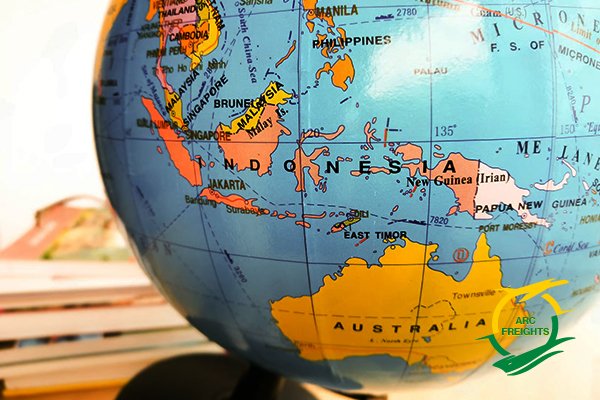
Southeast Asia is not one market. Mining activity, customer requirements, import procedures and transport conditions differ between countries.

Indonesia and the Philippines have drawn the most attention in recent Australian METS export programs. Vietnam also appears in Australian Government material, through examples of Australian equipment companies building a presence there.

Indonesia

Indonesia is the largest Southeast Asian market for Australian mining equipment and technology.

Austmine’s METS Opportunities in Southeast Asia report puts more than 100 Australian METS companies active in the country. GroundProbe runs a geotechnical support centre in Balikpapan, Kalimantan, monitoring mine slopes and tailings dams for the region. Truflo Pumping Systems opened an Indonesian branch and workshop in Balikpapan in 2024 and also trades into Vietnam. Meanwhile, Austrade describes Indonesia’s mining sector as running on nickel, coal and copper. It also notes how downstream processing is driving demand for equipment and services.

For Australian equipment exporters, cargo characteristics matter once an order is confirmed. Heavy machinery needs different transport arrangements than replacement components. Equipment bound for a remote project site may need transport well beyond the destination port.

Philippines

Australian METS exporters are also turning to the Philippines. The country sits on an estimated US$1 trillion in untapped mineral wealth. As the world’s second-largest producer of nickel, the Philippines is aggressively scaling up extraction to supply global EV and renewable energy markets.

The lifting of both the open-pit mining ban and the moratorium on new mining agreements has unlocked major pipelines for foreign suppliers. Austrade has mobilized major commercial delegations, such as the SEABX Sustainable Mining Mission. This brings dozens of Australian METS firms directly to mining hubs like Manila and Baguio to secure buyer partnerships.

The commercial opportunity can involve equipment and technology supplied directly to mining operations. Freight planning needs to account for the cargo’s size and handling requirements, and for where it ends up beyond the port.

Vietnam

Vietnam provides another market for Australian mining equipment and related systems. Driven by recent legislative overhauls and a historic diplomatic push, Vietnam is actively courting Australian expertise to build resilient, clean supply chains.

Vietnam holds the world’s second-largest reserves of rare earth elements. It also boasts massive, undeveloped deposits of bauxite, tungsten, and nickel. In August 2026, Australian Prime Minister Anthony Albanese and Vietnamese President Tô Lâm finalized an agreement to deepen cooperation on critical supply chains, pushing bilateral trade past A$30 billion.

Other Southeast Asian Markets

Smaller ASEAN nations have lower total mineral outputs but present less competition.

Malaysia, for example, is expanding its industrial footprint. Australian firms are actively targeting this market with downstream processing machinery and tracking software. Meanwhile, Brunei is increasing investment in onshore extraction for materials like limestone, sand, and gravel.

The ASEAN-Australia-New Zealand Free Trade Area also provides a trade framework covering Australia and ASEAN member states. Entered into force on 21 April 2025, the AANZFTA Upgrade simplifies access to existing tariff preferences. It also improves regulatory certainty for service providers.

Tariff treatment still depends on the individual product and the applicable rules of origin. Under AANZFTA, qualifying goods must satisfy the relevant origin requirements and supporting documentation requirements before preferential treatment can be claimed.

What Australian Companies Are Exporting to Southeast Asia

Mining exports vary physically. Some shipments involve large machinery that needs specialist handling. Other consignments contain components, replacement parts, or technology that travel in standard containers and smaller freight consignments.

Mining Machinery and Heavy Equipment

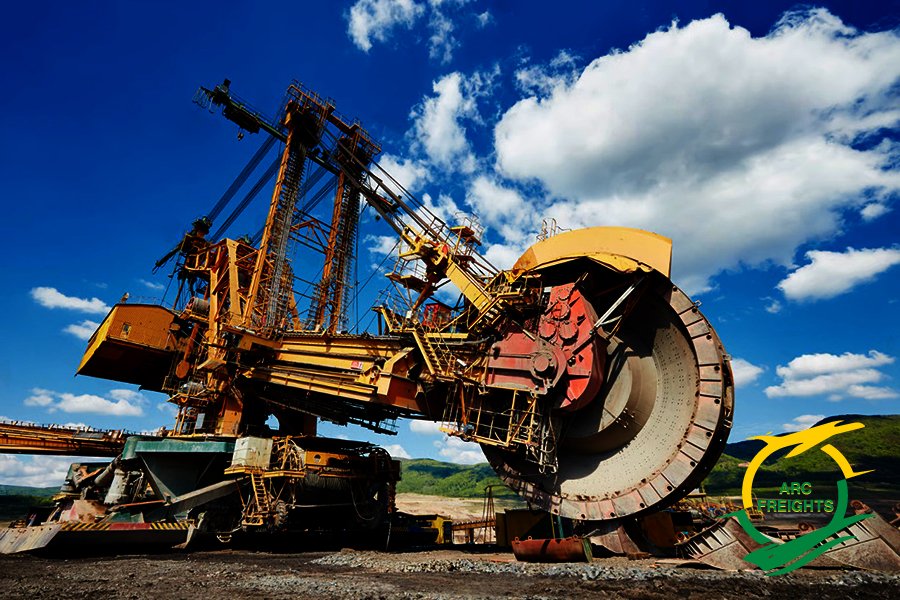
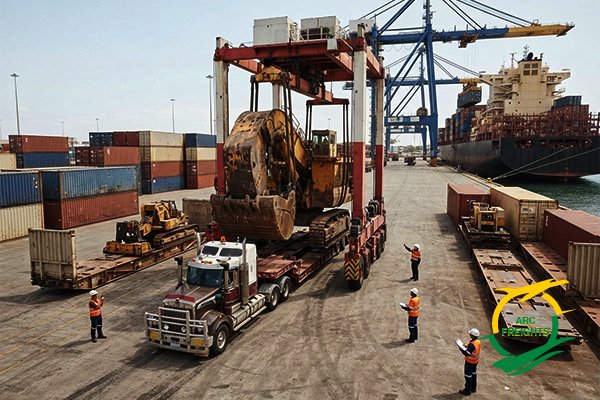
Large mining machinery can create transport requirements that differ from ordinary commercial cargo. Metrics like dimensions and weight affect equipment selection, loading arrangements, and inland transport. For example, cargo exceeding standard container dimensions requires options like flat racks, open-top containers, or breakbulk handling.

Mining Components and Replacement Parts

Smaller mining components can present a different freight requirement. Despite its smaller physical size, a replacement component can have the same, if not higher, time sensitivity. This is because the part may be required to return equipment to service. In such scenarios, air freight should be considered. Otherwise, LCL sea freight may be a better option over FCL shipping.

Mining Technology and Electrical Equipment

Mining technology exports can include monitoring equipment, sensors, control systems, automation hardware and other specialised products. These shipments may have different packaging and handling requirements from heavy machinery. Equipment containing batteries or other regulated materials may also require specific transport arrangements.

Further Reading: IMDG Code 2026

NOTE: Establish the product description before booking freight. This matters most where the cargo could fall under dangerous goods shipping.

Shipping Mining Equipment from Australia to Southeast Asia

Mining equipment can be shipped from Australia to Southeast Asia by sea or air. However, the best mode depends on the size, weight, urgency and handling requirements of the cargo. The door-to-door process can involve several separate transport legs. It typically starts with movement from the supplier’s premises to the Australian port/airport. Last-mile delivery wraps up the process after international ocean or air transport.

Further Reading: Introduction to Door To Door Sea Freight

Choosing the Right Freight Method

Sea freight will generally form the main international leg for commercial mining equipment. This is because it can accommodate substantial cargo volumes and longer-distance movements. However, air freight can still be used where delivery speed has a greater bearing on the shipment than transport cost.

The choice also needs to account for the destination. Deliveries to main industrial centers typically use direct domestic routes. However, remote sites often need extra truck transport from the arrival port.

Further Reading: Top Australian Ports for Exporting to ASEAN

Preparing Mining Equipment for Ocean Freight

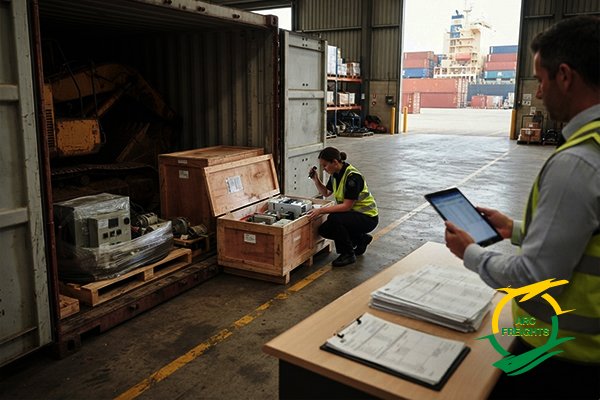
Preparation for the international journey should be completed before the cargo reaches the port. Equipment needs to be ready for loading, transfer between transport modes and handling during the voyage. This means workers should not need to change packaging at the dock. When shipping as separate pieces, each piece should be clearly marked with the main consignment number to track the cargo together.

Timing matters at this stage. Cargo that is not ready when the planned transport window arrives can create storage, handling or rescheduling costs.

Moving Heavy or Oversized Mining Equipment

Supplier location, Australian port, destination port and final delivery point all form part of the transport chain. In Australia, oversize and overmass road movements are subject to heavy-vehicle access arrangements. This can involve route and permit considerations. The same principle applies after arrival in Southeast Asia. For large equipment, checking the road journey on both sides of the ocean voyage can prevent a shipment from reaching a port where it cannot complete the planned onward movement.

Customs and Import Requirements for Mining Equipment

Upon arrival, customs clearance and other border requirements determine whether the equipment can be released for delivery. Requirements vary between Southeast Asian markets. Thus, exporters need to establish the applicable import rules before the shipment leaves Australia.

Product Classification

The product needs correct classification for customs purposes. This classification determines how officials identify the goods for tariff purposes. It can also affect the duties, taxes and other import requirements that apply.

Mining equipment can cover a wide range of products. Therefore, general descriptions such as “mining equipment” will not suffice here. Exporters need to establish the correct classification for the actual product shipped. This includes anything from complete machinery to pumps, electrical equipment and replacement components.

Where preferential tariff treatment is available under AANZFTA, the classification also determines the relevant rules of origin. DFAT states that AANZFTA uses product-specific rules of origin and provides procedures for demonstrating that goods qualify for preferential treatment.

Destination-Country Requirements

Destination countries set their own import rules. Depending on the product and destination, the importer may need to meet requirements relating to permits, standards, technical approvals, restricted goods or other regulatory controls before the cargo can be released. Commercial paperwork must also match the import declaration. Product descriptions, values, and origin details must stay consistent across all documents for correct evaluation.

Further Reading: What Is A Commercial Invoice?

The AANZFTA agreement lowers tariff rates if the goods meet origin rules. However, importers need valid certificates of origin to claim these reduced rates.

NOTE: Verify these rules before booking freight rather than after arrival. Resolving classification errors or missing permits at destination customs delays onward transit to the site.

Last Mile Delivery

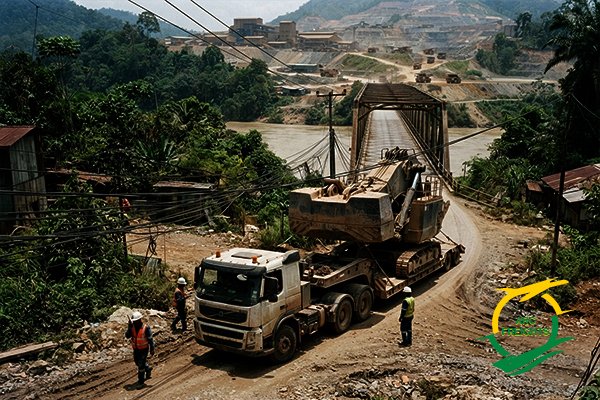
Southeast Asia presents unique geographical and infrastructural hurdles for heavy haulage. In Indonesia or the Philippines, reaching the final destination often requires an extra multimodal leg. For example, one may need to transfer cargo onto inter-island landing craft transport (LCT) barges.

While major ports feature state-of-the-art unloading cranes, the rural roads leading to the interior mining pits often feature low-clearance utility lines, unpaved terrain, and weak structural bridges. If a route survey indicates a bridge cannot support the weight, the equipment may need to be disassembled before loading in Australia to ensure it travels in lighter, separate modules.

Hence, it is best to arrange destination logistics before the cargo leaves Australia.

Planning a Mining Equipment Export Shipment

A quotation should be based on accurate cargo and delivery information. The following information provides a practical starting point for freight planning:

  • Cargo description, dimensions after packaging, total weight, quantity and commercial value.
  • Australian pickup location, Southeast Asian destination, required delivery date and any known dangerous goods or special-handling requirements.
  • Packaging condition, lifting requirements and whether the equipment is new, used, assembled or shipped as separate components.
  • Any available commercial invoice, packing list, tariff classification and information relevant to the destination country’s import requirements.

Accurate information at the quotation stage can reduce the need to revise the freight arrangement later.

Conclusion

Exporting mining equipment from Australia to Southeast Asia requires planning from the initial shipment through to final delivery. Cargo preparation, freight selection, customs clearance and destination logistics all need to be considered before the equipment leaves Australia.

A well-planned shipment can reduce delays and unexpected costs along the way. For Australian mining businesses exporting into Southeast Asia, a freight forwarding partner can coordinate the international freight, customs clearance and final delivery as one process.

Arc Freights is Australia’s leading Freight Forwarder offering QUALITY & RELIABLE logistics services in more than 140 countries. Having plied our expertise in ASEAN for nearly two decades, we are the trusted partner for logistics between Australia and Brunei, Cambodia, Indonesia, Laos, Malaysia, Myanmar, Philippines, Singapore, Thailand, and Vietnam. With expert knowledge, advanced technology, and a commitment to reliability, we provide seamless logistics management, including door-to-door sea freight services, that helps you focus on what matters most—growing your business.

Leave a Reply

Your email address will not be published. Required fields are marked *