Common Export Freight Mistakes
Managing complicated regulations, strict deadlines, and paperwork are all part of international trading. Mistakes in export freight affect both those new to the field and seasoned exporters. Due to varying regulations, assumptions made in one market can lead to operational challenges in another.
A thorough understanding of international shipping procedures is necessary to maintain export profitability. The following review identifies common mistakes and recommends effective shipping strategies.
Mistake 1: Not Checking Market Access
Exporters commonly focus on whether Australian law permits the export of a product. However, they often also neglect to verify whether the buyer’s country permits its import. Market access depends on the import regulations of the destination country, not Australian law. Here, it constitutes the legal permission for a specific product to enter a foreign jurisdiction for commercial sale. These regulatory requirements are separate and distinct questions that demand independent verification.
In Southeast Asia, market access protocols vary greatly by jurisdiction. This is most prevalent in the food and beverage industries. For example:
· Malaysia
o Dairy and agricultural imports must follow Ministry of Health’s guidelines
o Require pre-market registration with BPOM and FDA respectively
In other cases, the importer needs a license for the goods prior to cargo departure. Local customs can detain, sometimes even destroy, cargo that lacks the necessary paperwork.
Mistake 2: Missing or Incorrect Export Documentation
Missing or incorrect documentation is one of the most frequent and costly mistakes in export freight. It can lead to severe border delays, expensive port storage fees, customs fines, or total seizure of your goods. Exporters must prepare several standard documents to satisfy border protocols:
· Commercial invoice
o Primary document for customs valuation. It must include the HS code, declared value, country of origin, detailed description of goods, parties involved, and the Incoterm. Mistakes here trigger customs scrutiny at both origin and destination.
o Further Reading: What Is A Commercial Invoice?
· Packing list
o Details the contents of each package by weight, dimensions, and quantity. It must correspond exactly to the commercial invoice.
· Bill of lading or air waybill
o Issued by the carrier, serving as a contract of carriage and document of title for sea freight (bill of lading only).
· Export declaration
o Required for commercial shipments over AUD $2,000 leaving Australia, lodged through the ABF’s NEXDOC system.
o Further Reading: Mastering Australian Export Declaration
· Certificate of Origin
o Needed for qualifying shipments under the ASEAN-Australia-New Zealand Free Trade Agreement (AANZFTA). Without it, buyers pay full Most Favoured Nation duty rates.
· Product-specific permits
o Phytosanitary certificates, health certificates, Halal certification, or product registration approvals based on product and destination.
Documents must be complete and accurate before cargo departure. Corrections during transit are difficult, bordering on impossible. To avoid documentation mistakes, exporters should partner with freight forwarders. These professionals can help audit the necessary paperwork prior to departure.
Mistake 3: Incorrect HS Code Classification
HS codes classify goods for customs and determine applicable duties. The first six digits are international; additional digits specify national tariffs. The same product may fall under different codes depending on composition or use.
Each ASEAN member state applies its tariff schedule based on the ASEAN Harmonised Tariff Nomenclature (AHTN). Duty rates for an HS code vary by country. Therefore, misclassification affects financial outcomes differently per destination. If the HS code on the Certificate of Origin and commercial invoice does not match the buyer’s country’s code granting AANZFTA preferences, the concession is denied even if eligible. Consequences include:
· Overpaid Duties
o Paying higher tax rates than legally required, permanently draining profit margins.
· Underpayment Fines
o Facing severe government penalties, audits, and back-tax demands for underdeclaring duty rates.
· Customs Seizures
o Experiencing prolonged cargo holds, storage fees, or total confiscation due to suspected fraud.
· Loss of Export Privileges
o Risking the suspension or revocation of your international shipping licenses for repeated offenses.
The Australian Border Force checks HS codes on export declarations. Likewise, destination customs do the same on import.
Mistake 4: Misuse of Incoterms®

Incoterms® define when cost, risk, and logistics responsibilities transfer between seller and buyer. Misuse leads to disputes and unexpected liabilities. Three of the most frequent errors include:
· Using terms mismatched to transport mode:
o Exporters frequently write FOB or CFR on air freight documentation. However, these rules apply strictly to inland waterway and sea transport where goods are placed on board a vessel. FCA suits air or container shipments handed to forwarders before loading.
· Misunderstanding obligations under terms
o CIF requires the exporter to purchase cargo insurance. However, only the narrow Institute Cargo Clauses (C) standard, covering limited risks. This excludes standard transport losses, leaving the cargo exposed during transit.
· Divergent interpretations between trading partners
o Exporters and buyers may disagree on responsibilities like customs clearance.
In ASEAN, buyers often request CIF or CFR. Exporters accepting these may take on carrier selection and insurance responsibilities without full awareness.
Mistake 5: Overlooking Duties and Taxes
Overlooking duties and taxes is a critical export mistake that destroys profit margins and surprises international customers with unexpected costs. Failing to calculate these fees beforehand often leads to rejected shipments and abandoned cargo. It can also severely damage business relationships. Exporters frequently encounter difficulties through two distinct administrative failures:
· Not knowing applicable duty rates
o Quoting landed costs without understanding destination duties risks buyers facing higher costs than agreed. Indonesia and Vietnam have high Most Favoured Nation duty rates on some goods.
· Missing out on AANZFTA preferential rates
o Valid Certificates of Origin are required for reduced or zero duties under AANZFTA. Without them, buyers pay full MFN rates, significantly increasing costs.
Australian GST rules present another administrative consideration. Exported goods are zero-rated for GST. However, the Australian Taxation Office requires valid export documentation to substantiate this tax-free treatment. Failing to maintain these records exposes the exporter to domestic tax liabilities.
Mistake 6: Inadequate Cargo Packaging

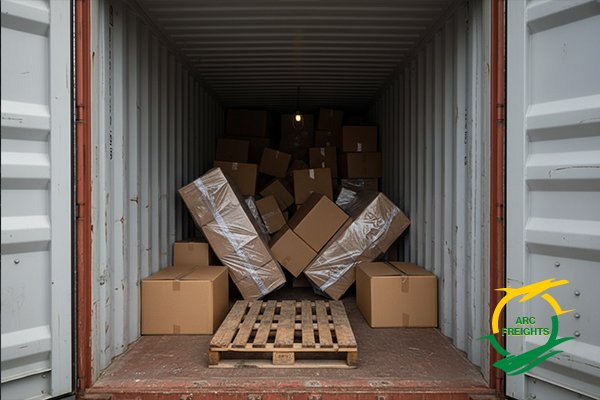
Unlike domestic shipping, export freight undergoes extreme stress. This includes ocean moisture, rough handling, and severe shifting during transit. Inadequate packaging results in damage, insurance complications, and, in some cases, shipment rejection.
For example, some exporters opt to use the cheaper domestic cartons for sea freight. However, humidity and duration weaken packaging. These may cause poor-grade packaging to collapse, damaging the goods inside.
Another common mistake involves poor load security. Stacked pallets may collapse under the weight of other cargo during turbulent sea or air transport. Therefore, pallets must support cargo weight and be secured to prevent shifting.
The third mistake is non-compliance with biosecurity protocols. International regulations require all solid timber packaging, such as pallets and crates, to undergo heat treatment or fumigation. Wood packaging must display the ISPM 15 mark to verify this processing. ASEAN customs authorities strictly enforce these rules at import checkpoints. If a shipment contains unstamped timber, the destination customs agency will quarantine or reject the cargo. The exporter must then pay for return shipping or on-site destruction.
Further Reading: How to Pack for Sea Freight
Mistake 7: Insufficient Freight Insurance
Carrier liability is not cargo insurance. Bills of lading and air waybills limit carrier responsibility to small amounts per kilogram and exclude many loss scenarios.
Exporters often assume the transport company must pay if they lose or damage the goods. However, global maritime laws protect carriers with broad liability exclusions, and proving carrier negligence is extremely difficult. Under maritime law, if an ocean vessel faces an emergency and sacrifices cargo to save the ship, all cargo owners must split the financial loss. Uninsured shippers must pay out of pocket to get the surviving goods released.
Some exporters also erroneously assume the foreign buyer has arranged coverage. Under terms like FOB, risk transfers to the buyer once the cargo is loaded onto the vessel. If the exporter does not verify that the buyer purchased a policy, the shipment remains uninsured during the initial transit legs.
NOTE: Exporters must also select the correct coverage level. Institute Cargo Clause (A) provides comprehensive all-risk coverage for high-value merchandise. Conversely, Clause (C) covers only limited named perils, which exclude standard transit damages.
Exporters should always read the sales contract carefully to confirm exactly who is buying the insurance policy. They should also take high-quality photos of the goods, packaging, and container loading process before the shipment departs. This is to prove its origin state during a claim.
Mistake 8: Not Checking Transit Times
Transit times vary by route, transport mode, service frequency, and port pairs. Committing to delivery dates without confirming transit schedules risks missed deadlines. Variables affecting transit include:
· Air freight
o 1–4 days from Australia to ASEAN markets.
· Sea freight
o Ranges from 3 days direct (Australia to Singapore) to several weeks on longer routes.
· Direct vs transshipment
o Indirect routes add wait times.
· Departure frequency
o Some routes have only one or two sailings weekly.
Transit time variability is particularly high on less-trafficked Southeast Asian routes. Shipping cargo to inland destinations like Laos via road freight from Thailand, or to minor ports in the Philippines, involves complex multi-leg routing. Many exporters also confuse port-to-port travel times with total door-to-door delivery windows, leaving zero buffer room for inevitable logistics delays.
Further Reading: What Is ETD, ETA, ATD, & ATA In Shipping
To better manage transit times, exporters should account for buffer days. Plan for longer transit times during high-volume shipping seasons, such as the pre-holiday rush or Golden Week.
Mistake 9: Underestimating the Full Shipping Timeline

Voyage time is only part of the total export timeline. Other stages often cause delays:
· Documentation preparation
o Obtaining certificates, preparing invoices and export declarations, and securing permits can take days.
· Cargo readiness
o Packaging, labelling, palletising, and organising collection often take longer than expected.
· Booking lead times and cut-offs
o Shipping lines require advance bookings with cut-off dates days before sailing.
· Destination customs clearance
o Varies by country and product; Indonesia’s multi-tier system can add several business days.
Clearance speed varies widely by nation. While Singapore offers rapid clearance, countries like Indonesia and Vietnam operate complex, multi-tiered inspection systems that require several business days even when documentation is complete. Exporters who base delivery promises solely on transit times will fail to meet their commercial agreements.
Mistake 10: Using the cheapest shipping option available
Choosing the cheapest shipping option available is a high-risk export mistake that frequently costs more in the long run. While saving money on upfront freight rates is tempting, ultra-low-cost providers often compromise on speed, reliability, security, and customer service.
Further Reading: What Are Landside Charges?
For example, low-cost carriers routinely “bump” cheap freight to later departures. This commonly happens if higher-paying cargo becomes available. The cheapest routes also often involve multiple stops and vessel transfers. This dramatically increases transit times and the risk of cargo damage.
ASEAN shipping services illustrate these price traps. While direct shipping to Singapore is frequent, services to minor ports like Manila or Hai Phong vary widely in quality. The cheapest quote to these ports often reflects an indirect route that adds weeks of transit time.
To address this issue, exporters should look beyond the initial freight quote. Calculate potential costs from delays, fines, and damaged stock. They should also partner with established freight forwarders who hold strong credit ratings and global network certifications.
Mistake 11: Non-Compliance with Export Laws and Standards
Compliance in international trade demands strict adherence to two independent regulatory frameworks. Exporters must comply with Australian export laws and the destination country’s import standards, each with distinct requirements and consequences. Failing to meet either of these requirements results in cargo seizure, legal penalties, or financial loss.
Australian side:
· Export controls
o Some goods require Defence Export Controls Office permits. This includes dual-use items, defence-related goods, and certain chemicals.
· CITES
o Products from protected species require permits, covering certain timber, animal, and plant products.
· Sanctions law
o Exporting to sanctioned persons or countries is a criminal offense managed by the Department of Foreign Affairs and Trade.
Destination countries:
· Product standards
o ASEAN states have unique regulations for food, cosmetics, medical devices, and electrical goods.
· Halal certification
o Required or commercially necessary for food and consumer goods in Malaysia and Indonesia.
· Importer licensing
o Some products require buyer import licenses; exporters should verify before shipment.
Proof of compliance must be documented with permits, certificates, and records available on demand. Non-compliance in Australia risks criminal penalties. Meanwhile, failure at destination causes shipment refusal and financial losses.
Conclusion
The mistakes in export freight cover a broad range of issues: market research, documentation, product classification, commercial terms, packaging, insurance, logistics planning, and compliance. A successful export shipment depends on careful attention to each stage.
Arc Freights has managed these complex requirements since our establishment in 2006. As a FIATA-accredited and ISO 9001 certified provider, we coordinate the complete door-to-door export process. Having plied our expertise in ASEAN for nearly two decades, we are the trusted partner for logistics between Australia and Brunei, Cambodia, Indonesia, Laos, Malaysia, Myanmar, Philippines, Singapore, Thailand, and Vietnam. With expert knowledge, advanced technology, and a commitment to reliability, we provide seamless logistics management, including door-to-door sea freight services, that helps you focus on what matters most—growing your business.