What Changed
The Ministry of Health (MOH) governs foodservice products. Meanwhile, BPOM governs packaged retail beverages. This establishes two distinct regulatory pathways for Indonesia’s Nutri-Level system.
Decree No. HK.01.07/MENKES/301/2026 took effect on 14 April 2026. It covers ready-to-eat and ready-to-drink beverages served in foodservice outlets. It also provides general policy guidance for retail packaging.
Regulation No. 10 of 2026 governs pre-packaged drinks sold on retail shelves. It was signed on 9 June 2026 and officially enacted on 17 June 2026.
Packaged beverage manufacturers have a 24-month transition period from the BPOM enactment date. This makes the final compliance deadline 17 June 2028.
How Grading Works
Nutri-Level places each covered beverage in one of four colour-coded levels, labelled A to D. Here, A marks the most favourable nutrient profile and D the least favourable. Beyond the letters, the levels differ in colour and in the sweeteners they permit:
- Level A is dark green and permits no sweeteners, natural or artificial.
- Level B is light green and permits natural sweeteners only.
- Level C is yellow and permits both natural and artificial sweeteners.
- Level D is red and permits both natural and artificial sweeteners.
BPOM Regulation No. 10 of 2026 defines the technical standard for packaged retail beverages. It evaluates sugar, sodium, and total fat content per 100 ml of ready-to-consume product. Conversely, the Ministry of Health decree evaluates sugar, salt, and saturated fat. Because the regulation sets the implementing requirements, its terms are the technical reference.
The lowest-scoring nutrient determines the final Nutri-Level grade. Both rules ensure that if a drink is high in just one risk nutrient, it receives the lowest overall grade. For packaging, exporters can choose between two label formats depending on the front-label space. The full format is available in horizontal or vertical layouts. The simple format is a smaller version for tighter spaces.
Covered Beverages
Mandatory Nutri-Level labelling applies to four categories of beverage:
- Ready-to-drink beverages
- Powdered beverages
- Liquid beverage concentrates
- Solid beverage concentrates
Infant formulas, follow-on formulas, growing-up formulas, and special medical foods are exempt from the Nutri-Level mandate. Other processed foods are also exempt for now. According to Austrade, the requirement currently applies only to beverage products. Meanwhile, alcoholic drinks face a separate restriction. Separately, a legal update by Veritask notes that Article 4 prohibits nutrition information panels on labels of alcoholic beverages of any type.
Further Reading: Wine Export: Food Standards Code Exemptions
Austrade advises beverage exporters to review product nutrition profiles against the new standards to determine if they need packaging updates. All covered beverages need to display the Nutri-Level grade mark. However, additional disclosure rules differ by tier. Level C and D products need to display the Nutri-Level mark alongside the specific nutrient content per 100 ml. Level A and B products may include that breakdown or show the mark alone.
Beyond the physical labels, the USDA expects compliance costs to increase. These expenses will stem from packaging redesigns, revised nutrition panels, grade calculations, and updated BPOM registrations. Under Article 2, the legal duty to display the nutrition information panel falls on any business producing or distributing processed food in Indonesia. In practice, local agents or importers handle the registration for imported products.
Further Reading: Mastering Australian Export Declaration
NOTE: Nutrition figures require verification by a government or accredited laboratory. For imported products, exporters can submit a certificate of analysis from an authorized laboratory in the country of origin.
Shipping Considerations
Verifying labels prior to dispatch is essential, as the importer applies for the single-use SKI Post Border import certificate using a valid BPOM registration. The product label has to comply with BPOM rules, including Indonesian-language text. Timing is also critical. The importer needs to obtain the certificate before, or within seven days after, release from the customs area.
Further Reading: Common Export Freight Mistakes
What Comes Next
Indonesia has indicated that expansion to additional food categories remains under consideration. Austrade likewise notes that future regulations may extend the requirement beyond beverages. The decree also allows other food products to become subject to it under future implementing regulations. Austrade therefore suggests that exporters consider monitoring future announcements for these scope expansions. BPOM, for its part, issues its announcements as press releases.
Conclusion
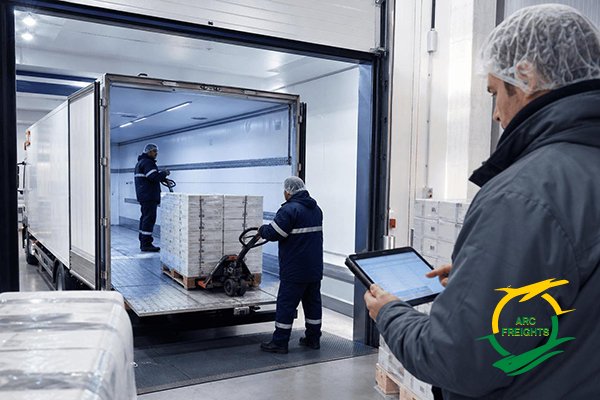
Indonesia’s Nutri-Level labelling requirements will affect how beverage exporters prepare their products for the Indonesian market. From 17 June 2028, covered beverages must meet the new labelling rules. Australian businesses should use the transition period to review their product labels, confirm BPOM registration requirements and check that each shipment meets Indonesian import procedures before dispatch. A freight forwarder can help coordinate shipping, customs clearance and temperature-controlled transport where needed. This support can help keep shipments moving while businesses adjust to the new requirements.
Arc Freights is Australia’s leading Freight Forwarder offering QUALITY & RELIABLE logistics services in more than 140 countries. Having plied our expertise in ASEAN for nearly two decades, we are the trusted partner for logistics between Australia and Brunei, Cambodia, Indonesia, Laos, Malaysia, Myanmar, Philippines, Singapore, Thailand, and Vietnam. With expert knowledge, advanced technology, and a commitment to reliability, we provide seamless logistics management that helps you focus on what matters most—growing your business.