How Do I Choose the Right Cold Chain Packaging for Perishable Goods
Companies handling temperature-sensitive goods face significant cargo spoilage and financial losses during transit if cold chain packaging fails. Perishable goods rely on strict temperature management to maintain product quality. While cold chain shipping exists, the cargo may still be exposed to temperature fluctuations. Therefore, logistics managers need to treat cold chain packaging as the first line of defence when shipping perishable goods. Evaluating the correct cold chain solution involves assessing the following four factors.
Temperature Range of Product
Packaging selection begins with understanding the product’s required temperature range. This determines the appropriate category of packaging. Perishable goods fall into four broad temperature bands:
· Chilled / Refrigerated (0°C to +7°C)
o Covers fresh produce, fresh meat, cut flowers, and some dairy products.
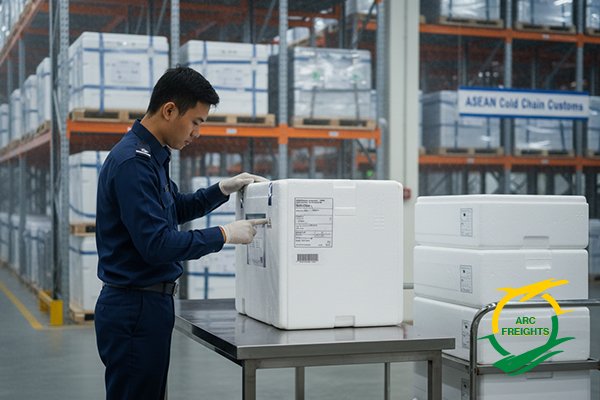
o Products within this range must remain cold without freezing. Insulated cartons, insulated liners, EPS (expanded polystyrene) boxes, gel packs, and wet ice are commonly used depending on transit duration.
· Ice Temperature / Near-Freezing (-2°C to +2°C)
o Covers fresh seafood and certain (usually premium) fish products.
o Temperature tolerance is narrow and product quality can decline quickly when temperatures fluctuate. Ice-based cooling systems or phase-change materials designed for this range are often required.
· Frozen (below -18°C)
o Covers frozen meat, poultry, ice cream, and seafood.
o Packaging generally incorporates dry ice or phase-change materials capable of maintaining sub-zero conditions throughout transport.
· Ultra-Low Temperature (below -30°C or below -60°C)
o Covers pharmaceutical products, clinical trials, blood plasma, and gene therapies.
o Packaging combines dry ice with vacuum-insulated panels (VIPs) or cryogenic containers, with limited options available.
The exact temperature must be confirmed against the product’s technical data sheet or regulatory standards. For example, a 2°C deviation in near-freezing seafood can cause spoilage or freezer burn, resulting in product loss.
Freight Mode and Transit Time
Air Freight
Air cargo moves quickly. This makes air freight the go-to option for fresh perishables with narrow thermal tolerances. Door to door transit time from Australia to ASEAN typically takes 1 to 5 days by air. The shorter transit window allows exporters to use lightweight passive packaging, including expanded polystyrene (EPS) boxes or insulated foil liners. However, frozen shipments often require dry ice, which carriers regulate strictly under international aviation safety rules. Shippers must declare dry ice weight and use vented containers to avoid cargo rejection at the airport tarmac.
Further Reading: 8 Things You Should Know About Air Freight in Australia
Sea Freight

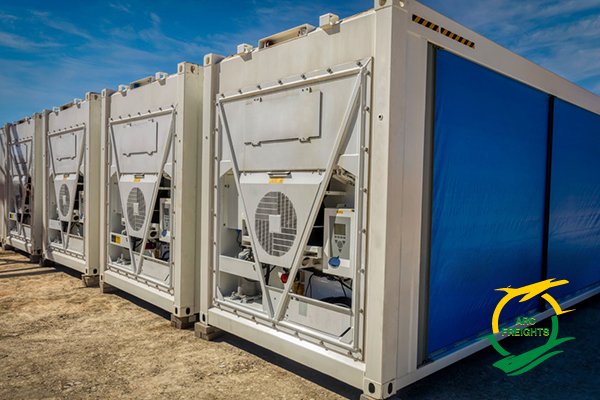
Sea freight voyages from Australia to Southeast Asian ports expose perishable cargo to thermal risks for 7 to 21 days. Passive insulated packaging alone cannot maintain safe temperatures over multiple weeks. Consequently, exporters must rely on active cold chain logistics through temperature-controlled refrigerated containers.
In this case, cold chain packaging revolves primarily around protection. Moist sea air weakens standard cardboard, causing it to sag and buckle. This can block ventilation, creating hot spots that accelerated cargo spoilage. Using ventilated, moisture-resistant boxes prevents physical collapse and supports uniform cooling throughout the container.
Transit Time
Packaging must suit the full journey duration, not just the advertised transit time between two transport hubs. In door to door shipping, a shipment may spend time in warehousing before departure, on the airport tarmac, in customs inspection areas, at distribution facilities, or awaiting collection by the recipient.
Further Reading: Introduction to Door To Door Sea Freight
It is also essential to calculate packaging performance against the worst-case scenario. For example, customs clearance may typically take 4 hours but could extend to 18, affecting temperature control. Packaging rated for 24 hours in a 35°C environment provides a safer margin than one rated for 12 hours. Customs inspections at ASEAN borders often add time outside refrigeration. Phytosanitary or food safety checks may extend dwell times, increasing the thermal protection needed.
Destination Requirements

Packaging selection must comply with destination country regulations, which govern materials, labels, and certifications. For example, packaging labels may need to be in the local language. Meanwhile, importers may be requested to provide temperature logs from reefer containers during customs clearance. This necessitates adjustments to the packaging to accommodate these requirements.
Most ASEAN countries also require cold chain packaging for food to be food-grade certified and meet the local food safety authority’s standards. Some products, particularly fresh produce, require phytosanitary certificates regardless of packaging. Regulations vary by country, so shippers should verify destination-specific requirements with their freight forwarder before finalizing packaging.
Further Reading: Top Australian Ports for Exporting to ASEAN
Operational Practicality
Packaging that meets technical requirements can still fail if incompatible with warehouse, carrier, or recipient facilities.
· Palletization and Dimensions
o Standard export pallets require precise carton sizes to maximize space.
o Boxes must withstand vertical stacking weight without compression of internal insulation layers.
o Non-standard containers increase volumetric freight charges and handling risks.
· Handling Safety and Workforce Training
o Packaging that uses dry ice requires specialized personal protective equipment [1.2.3].
o Warehouse facilities must have active ventilation systems to prevent carbon dioxide gas accumulation in sealed rooms.
o Shippers must implement safety training before they introduce hazardous materials into daily packing workflows.
· Consignee Facility Capacity
o Thermal protection must extend to cover unexpected delivery delays at the destination.
o Recipient facilities often operate with limited cold storage or unpredictable business hours.
o Packaging must keep products safe on the receiver’s loading dock if cold storage is temporarily unavailable.
· Waste Disposal and Municipal Policies
o Single-use expanded polystyrene (EPS) faces tight disposal restrictions in several Southeast Asian municipalities.
o Reusable systems, like vacuum-insulated panels, offer long-term cost benefits but require returning empty containers.
o Exporters must coordinate with consignees to verify that the destination facility can easily manage packaging waste.
When to Speak to a Cold Chain Specialist
Packaging decisions are connected to freight planning decisions. However, the four aforementioned factors cannot be managed in isolation. For example, transit time depends on freight mode, which depends on temperature sensitivity and shipment cost. A packaging decision made before these variables are confirmed may need to be revised later.
Cold chain freight specialists can provide route-specific transit estimates and identify refrigeration infrastructure available throughout the journey. They also review destination-country requirements, as well as assess whether the proposed packaging solution is compatible with carrier procedures and handling conditions.
Further Reading: Why You Should Work With A Freight Forwarder
Businesses preparing an international perishable shipment generally benefit from obtaining logistics input before packaging specifications are finalised. Early planning reduces the likelihood of redesigns, repacking costs, and operational delays.
Conclusion
Selecting cold chain packaging for perishable goods begins with understanding the product’s temperature requirements. That requirement determines the packaging category. Transit duration and freight mode then determine how long the packaging must maintain performance. A packaging choice that appears suitable on paper may become unsuitable once routing, customs procedures, or recipient capabilities are considered.
Arc Freights specialises in cold chain logistics across the Australia-ASEAN corridor and has more than a decade of experience supporting fresh food, processed food, pharmaceutical, and chemical cargo movements. As a FIATA-accredited and ISO 9001 certified provider, we coordinate the complete door-to-door export process. Having plied our expertise in ASEAN for nearly two decades, we are the trusted partner for logistics between Australia and Brunei, Cambodia, Indonesia, Laos, Malaysia, Myanmar, Philippines, Singapore, Thailand, and Vietnam. Early consultation often helps avoid costly changes once cargo is ready to move.